
Measuring Lead Quality Across Paid Marketing Campaigns

High lead volume can hide a serious campaign problem: your client may receive form fills that are unreachable, outside the service area, poorly matched, or unlikely to buy. We recommend measuring lead quality by connecting Facebook Ads, Google Ads, and TikTok Ads data to qualification rules, CRM stages, appointments, and sales outcomes.

Why Lead Volume Does Not Tell an Agency Whether a Paid Campaign Works
A campaign can produce many form fills while sending a client low-intent, duplicate, unreachable, or out-of-area contacts. Lead quality gives you a more useful view by showing whether each inquiry fits the offer, includes usable contact details, states a real need, falls within the service area, and shows an appropriate level of buying readiness.
Platform metrics such as cost per lead, click-through rate, and landing-page conversion rate describe activity, but they do not confirm sales value. Facebook, Google, and TikTok campaign data needs to connect with CRM and sales follow-up data before an agency can judge performance. Without that connection, a low-cost campaign may look successful while the sales team spends its time filtering unusable inquiries.
Unclear definitions also create reporting disputes. A client may call every form submission a lead, while an agency may count only contacts that meet location and service requirements. Before evaluating a white-label advertising partner, agree on what counts as an inquiry, qualified lead, appointment, opportunity, and sale.
Separate inquiries from qualified opportunities
An inquiry is a response to an ad or form, while a qualified opportunity meets agreed fit and intent requirements. We recommend recording the difference in the CRM so reports can show raw leads, verified contacts, qualified leads, booked appointments, and later sales stages separately. This prevents a cheap form submission from receiving the same value as a sales-ready prospect.
Trace the path from ad click to sales outcome
Every lead should retain its source, campaign, ad set, creative, landing page, and current sales status. When those details follow the contact through the CRM and sales process, your team can identify whether quality changes by platform, audience, message, or follow-up speed instead of relying on blended averages.
Which Lead-Quality Signals Should You Track Across Facebook, Google, and TikTok Ads?
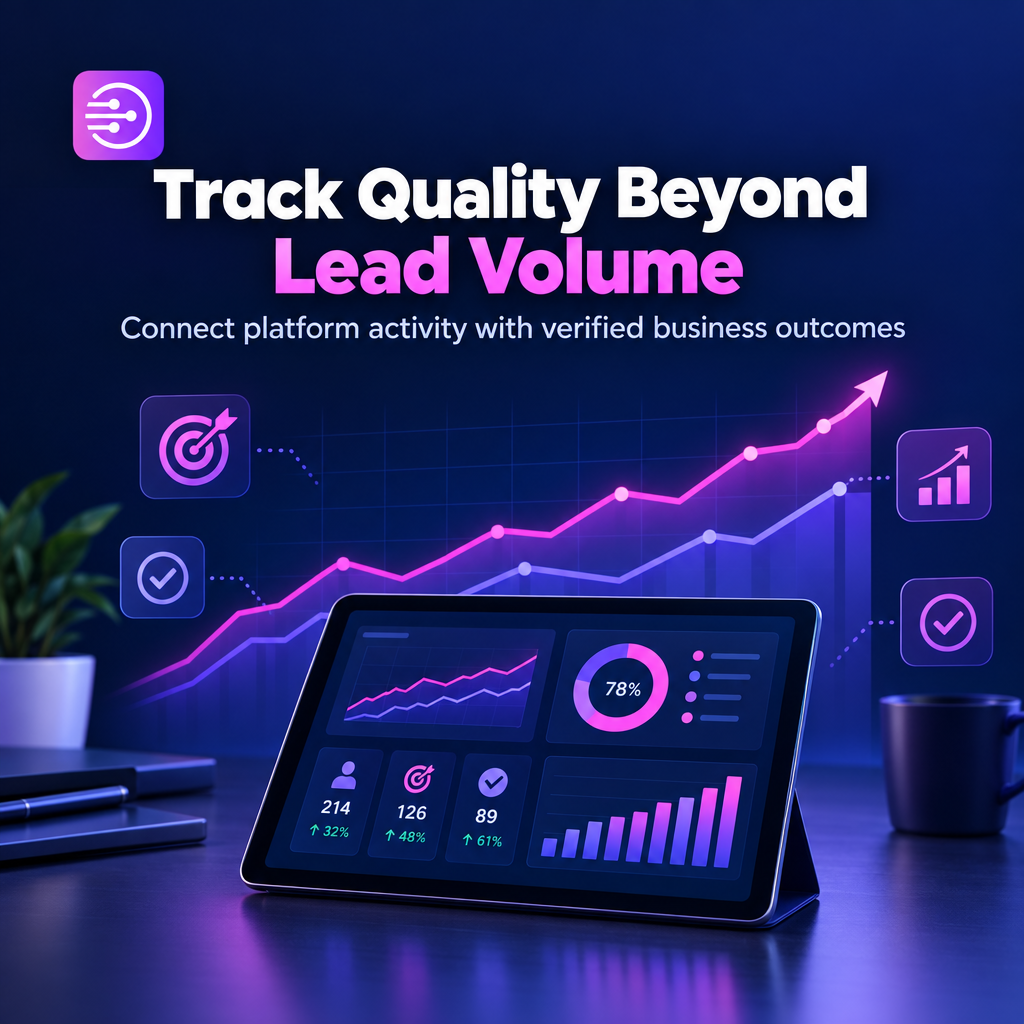
Track platform activity and business outcomes together, because neither category explains campaign quality on its own. A low cost per lead can hide poor fit, while a higher acquisition cost may be reasonable when contacts book appointments and progress into opportunities.
Define the ideal lead: Record the client's preferred customer type, service area, eligible services, exclusions, budget range when relevant, and buying-readiness requirements. Verify contact details: Check whether the phone number, email address, name, and location are usable, and mark duplicates or unreachable contacts consistently. Classify intent: Use agreed labels such as information request, active project, quote request, consultation request, or unclear need. Record sales status: Track new, contacted, qualified, appointment booked, opportunity, disqualified, and closed stages in the CRM. Calculate downstream conversion: Compare qualified-lead rate, appointment rate, opportunity rate, and sales progression by source rather than judging cost per raw submission alone. Tag the source, campaign, ad set, creative, landing page, and lead status on every record. Then compare click-through rate, form completion, landing-page conversion, and cost per lead with qualified-lead rate and opportunity rate. This lets an agency see whether a creative attracts attention but poor-fit contacts, or whether a smaller audience produces fewer yet stronger opportunities.
Build a shared lead-quality scorecard
A shared scorecard should define each stage in plain language and assign ownership for updating it. Include fit, contactability, stated need, location, appointment status, CRM stage, and sales outcome, then review the same fields with the client, agency, and fulfillment partner. The scorecard becomes the reference point when performance discussions become subjective.
Use campaign metrics as diagnostic clues
Campaign metrics help locate friction, but they do not replace sales feedback. A weak click-through rate may indicate an audience or message issue, while strong clicks and poor qualification may point to the landing page, form questions, offer, or targeting. Review these clues alongside disqualification reasons and appointment outcomes before changing budgets.
What Should a White-Label Paid Advertising Partner Include Beyond Media Buying?
A capable white-label paid advertising partner should explain its delivery scope across ad creation, copywriting, campaign setup, performance tracking, optimization, and reporting. Media buying alone does not show who creates the offer, checks conversion tracking, reviews lead quality, or communicates performance to your agency.
White-label delivery allows work to be presented under your agency's brand while your team controls client communication and positioning. Before comparing providers, ask how each area is handled:
Creative production: Confirm who develops ad concepts, designs, copy, and revisions. Tracking: Confirm how clicks, forms, calls, and CRM stages are recorded. Optimization: Clarify who reviews performance and changes targeting, creative, or budgets. Reporting: Ask whether reports include lead-quality stages rather than impressions and clicks only. Platform coverage: Check whether the scope includes Facebook Ads, Google Ads, TikTok Ads, or only selected channels. Account access: Establish what the agency can view and how client-facing information is controlled.
DashClicks' confirmed white-label Facebook advertising scope includes ad creation, copywriting, performance tracking, and optimization under the agency's brand. That scope can support agencies that need branded fulfillment, but you should still match the delivery details to your own qualification and reporting process.
Check the delivery scope before comparing providers
Compare providers by included work, not by a headline management label. Ask whether campaign setup, landing-page or funnel support, copy revisions, conversion tracking, optimization reviews, reporting, and platform management are included. A lower fee may represent a narrower service, while a broader scope may reduce the internal work your team must absorb.
Confirm agency branding and client visibility controls
Confirm how reports, communications, dashboards, and deliverables appear to your clients before launch. Your team should understand which branding elements can be used, who communicates recommendations, what account access is available, and how sensitive campaign or CRM information is handled. Clear visibility rules help the agency retain a consistent client relationship.
How Can an Agency Verify Lead Quality During Onboarding and Reporting?
An agency can verify lead quality by agreeing on qualification rules before launch and then reviewing source-level CRM outcomes on a regular cadence. During onboarding, ask about the ideal customer, service area, exclusions, required qualification questions, conversion actions, response process, duplicate handling, and the meaning of each sales stage.
Map the handoff from ad platform to landing page or form, CRM, unified communications inbox, and sales team. Assign responsibility for status updates, contact attempts, duplicate records, appointment results, and disqualification reasons. DashClicks offers CRM, automation, unified communications, and real-time analytics capabilities that can support this operating model, but agencies should confirm how the intended integrations and workflow will function for each client.
Separate delivery reporting from quality reporting. Delivery reports can include spend, reach, clicks, form completion, and cost per lead. Quality reports should include source-level lead status, qualified-lead rate, appointment outcomes, opportunity progression, and reasons for disqualification. This structure helps the team decide whether to adjust targeting, creative, forms, follow-up, or the client's sales process.
Agree on qualification rules before launch
Qualification rules should state exactly which contacts count as qualified and which conditions disqualify them. Document location limits, service eligibility, duplicate treatment, minimum project requirements, buying-readiness signals, and the expected sales action after submission. We recommend testing these definitions against sample scenarios so the client and fulfillment team interpret them consistently.
Connect advertising data with CRM and sales follow-up
Advertising data becomes useful when the CRM preserves the original source and the sales team updates status after each meaningful contact attempt. Connect the form or landing page to the agreed workflow, then verify that records retain campaign details and can move through qualification, appointment, opportunity, and disqualification stages. Review exceptions manually rather than assuming every handoff is automatic.
How Much Does White-Label Facebook Ads Management Cost to Compare Fairly?
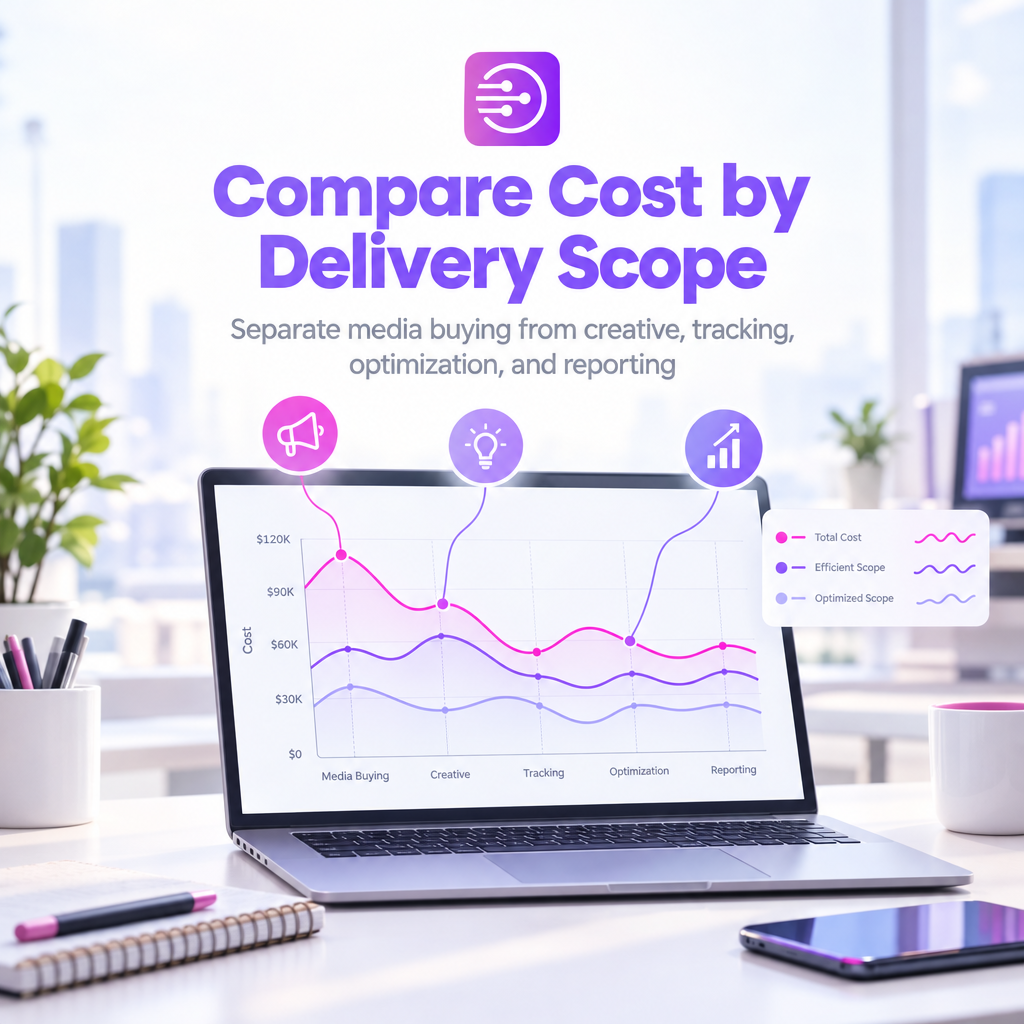
White-label Facebook Ads management should be priced from scope rather than treated as one universal fee. Creative production, copywriting, tracking, optimization, reporting, platform coverage, account volume, and revision needs all change the work required.
Separate the provider's service fee from the advertising budget, landing-page or funnel work, CRM setup, creative revisions, onboarding costs, and any platform charges. When requesting proposals, ask about the pricing structure, included revisions, minimum commitments, reporting access, cancellation terms, and responsibility for compliance review. Do not assume that a quoted management fee includes media spend or every part of the conversion process.
Compare total cost against qualified leads, booked appointments, sales opportunities, and client retention instead of cost per raw form submission. A campaign that costs more per initial lead can still be more useful if its contacts fit the service area, answer the phone, book appointments, and progress through the CRM.
Separate management scope from media spend
Management fees pay for defined work, while media spend pays the advertising platforms to distribute campaigns. Keep those amounts separate in client reporting and ask whether the proposal includes Facebook only or also Google Ads and TikTok Ads. Request an itemized description of setup, creative, tracking, optimization, reporting, and account support before comparing totals.
Calculate the cost of poor lead quality
Poor lead quality costs more than an unsuccessful form submission because staff may spend time calling, filtering, documenting, and explaining unusable contacts. Estimate the effect through response time, sales-team hours, missed appointments, opportunity loss, and client dissatisfaction. This gives your agency a clearer reason to prioritize qualified-lead rate over the lowest possible cost per lead.
When Should an Agency Choose a White-Label Partner for Paid Campaigns?
An agency should choose a white-label partner when it needs more delivery capacity, branded fulfillment, or managed advertising support that matches its client workflow. The fit can also make sense for small and medium-sized businesses that need lead generation but rely on an agency to manage campaign execution and reporting.
Before presenting the service, check supported platforms, onboarding steps, reporting access, branding controls, service boundaries, optimization responsibility, and lead-quality definitions. Warning signs include reports that stop at impressions and clicks, unclear ownership of CRM updates, no documented qualification criteria, limited account visibility, or promises of guaranteed results.
DashClicks supports agencies with white-label marketing services and an integrated platform that includes advertising, CRM, automation, project management, and analytics capabilities. Agencies can review DashClicks' white-label advertising and integrated marketing options , then ask how the workflow would map to their client reporting process.
Use a fit test before presenting the service to clients
Use a fit test that asks whether the partner supports the client's platforms, audience, service area, conversion path, CRM workflow, reporting expectations, and branding requirements. Confirm who handles creative, optimization, follow-up visibility, and quality reviews. If those answers are clear and the scope matches your agency's promises, the service is easier to position responsibly.
Set escalation rules when lead quality falls
Escalation rules should specify when the agency reviews targeting, creative, form questions, follow-up speed, or sales-stage definitions. Set a regular review point and require evidence such as disqualification reasons, contact rates, appointment outcomes, and opportunity progression before changing the campaign. This keeps optimization focused on the actual source of quality problems.
Frequently Asked Questions
What should an agency measure to determine whether paid campaign leads are qualified?
Define qualification before launch and track fit, contactability, intent, location or service eligibility, appointment status, CRM stage, and sales outcome alongside cost per lead. Qualified-lead rate and opportunity rate show more than raw form volume.
How does a white-label partner report lead quality under an agency's brand?
Branded reporting connects campaign source data with CRM statuses, qualification rules, appointments, and sales follow-up. The agency can retain its client-facing process while presenting a clearer view of lead progression.
How can an agency get started with a white-label paid advertising provider?
Gather client goals, audience and service-area details, qualification rules, access requirements, branding preferences, CRM workflow, and reporting expectations before the onboarding call. Use those details to test whether the provider's scope matches the promised campaign process.
Is white-label paid advertising suitable for digital marketing agencies and small to medium-sized businesses?
It can fit agencies that need branded fulfillment and businesses that want managed lead generation, provided the provider's scope, reporting process, platform support, and lead follow-up responsibilities match their needs. Review the qualification process before treating campaign volume as success.
Comments